
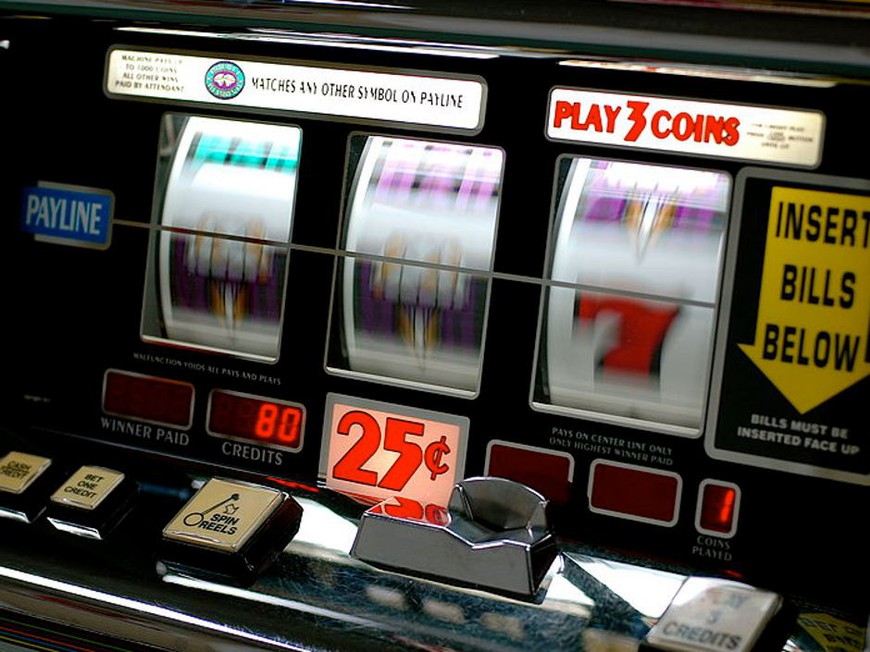
Each spin of the slot reel and any turn of a digital card at SkyHills Casino is governed by a unseen, lightning-fast arbiter known as the Random Number Generator https://skyhillscasinoo.com/. Gamblers in Canada often ask whether the games they experience are genuinely fair or ruled by a secret influence. The answer rests in advanced mathematical architecture designed to imitate, and often outdo, the unpredictability of physical gaming equipment. At SkyHills Casino, the integrity of this system is not just a technical detail; it constitutes the foundation of the whole gaming experience. A correctly deployed Random Number Generator removes human bias and mechanical wear, assuring that a game’s theoretical return to player percentage remains valid over millions of cycles, which creates a transparent environment where strategy and luck coexist authentically.
What Exactly Is a Random Number Generator?
An RNG often shortened to RNG, is an algorithmic process created to yield a series of numbers that lacks any discernible pattern. In the world of online casino entertainment, this string directly determines game outcomes, for instance the symbols lining up on a digital slot machine or the cards distributed in a blackjack hand. This technology does not rely on memory; it does not recall if the previous ten spins ended as wins or losses. Instead, it generates thousands of number combinations per second, even when no one is playing. The precise nanosecond a player clicks the spin button decides which numerical value is captured from this rapid stream. SkyHills Casino uses this exact method to produce outcomes that are completely detached from previous results, making sure a purely probabilistic model controls each and every gaming session without outside interference.
The way SkyHills Casino Secures True Fairness
Trust in a virtual platform has to be achieved through demonstrable verification, not just technological jargon. SkyHills Casino follows stringent international standards to verify its RNG software, changing the conceptual concept of unpredictability into a provable assurance for Canadian users. The entire operational flow includes independent examiners who analyze the source code and conduct simulated play through millions of iterations. These testing houses check for statistical deviations, such as an unnatural arrangement of high cards or a bias toward specific reel stops. The data must demonstrate that no predictable patterns arise. Once the software survives these brutal stress tests, a document of compliance is issued. reddit.com This validation process is not a one-time event; it is a ongoing audit that ensures any updates to the gaming suite do not jeopardize the algorithm’s integrity, thereby preserving a level playing field at all times.
The science behind Pseudo-Random Generation
Most digital gaming platforms, including SkyHills Casino, operate on a model known as pseudo-random number generation. True randomness is a physical phenomenon, often obtained from atmospheric noise or radioactive decay, which can be hard and slow to incorporate into high-speed gaming software. A pseudo-RNG uses a seed number, a foundational value that is processed through a complex deterministic formula to create sprawling sequences that appear statistically perfect. For a casual player, the gap between pseudo-random and true random is imperceptible because advanced algorithms like the Mersenne Twister meet the most rigorous statistical tests for pattern detection. Canadian players can take confidence in knowing that the seed numbers are derived from chaotic, constantly fluctuating variables, rendering the code functionally impossible to predict. This cryptographic layer assures that neither the house nor the player can alter the sequence once it is in motion.
Clearing Up Common RNG Myths at SkyHills Casino
A extensive mythology shrouds slot machines and digital tables, with many Canadian players thinking that hot and cold streaks are manufactured by the software. The most enduring myth is that a game that has not paid out in a while is “due” for a big win. In reality, the RNG at SkyHills Casino has no sense of historical debt. A slot game operating on a true probability curve is just as likely to deliver a jackpot twice in a row as it is to dry up for thousands of spins, because every event is an isolated mathematical occurrence. Another common misconception entails the belief that the casino can flip a switch to tighten the games during peak hours. Regulatory constraints and the sealed nature of the certified RNG software render this impossible without triggering immediate audit failure. Withdrawal times or bet sizes have zero influence on the random sequence, refuting the idea that the algorithm punishes winning players.
Autonomous Auditors and the Certification Process
The highest standard of fairness in the Canadian market depends largely on accredited third-party testing laboratories. Entities like iTech Labs or GLI put the RNG engine at SkyHills Casino to exhaustive evaluation. These auditors deconstruct the code to guarantee the output is evenly distributed and non-repeatable. They monitor payout percentages to ensure they correspond to the advertised theoretical return. If a slot game advertises a ninety-six percent RTP, the auditor must verify that the RNG drives that exact mathematical reality over the long term. This independent relationship between the testing facility and the casino is a critical consumer protection mechanism. The results of these audits are often distilled into seals of approval featured on the platform’s footer. For a player, tapping those seals typically directs to a live verification page, immediately verifying that the game outcomes are being actively monitored for fairness and statistical accuracy.
The Function of RTP in Chance Results
Player Return, frequently referred to as RTP, is the expected rate of all bets that a game pays back to players over a large sample size, and it is closely connected with the RNG. This figure is no indicator of any individual play but a long-term mathematical expectation. The RNG determines precisely which symbols land, but it does so within a weighted probability table that aligns with the stated RTP. For example, if a game has a four-point house margin, the RNG does not simply deduct four chips from every hundred; rather, the probability of achieving premium payouts is statistically rarer than low-value ones. SkyHills Casino presents games where the RNG and the paytable work in perfect harmony, offering transparency for players who follow their numerical results. Comprehending RTP helps responsible players understand that variance is the immediate variation surrounding the distinct, expected pattern of the house edge over millions of spins.
In the end, the RNG is the unseen sentinel of fairness in the digital gaming world. By demystifying this technology, Canadian users can view their gaming options at SkyHills Casino with certainty, equipped with the understanding that tested calculations, rigorous independent oversight, and transparent operational ethics create a authentically balanced environment. The rotating wheels and animated cards are just graphical representations of a deeply complex, uncrackable numerical stream.
FAQ
In what way does SkyHills Casino create its random numbers?
SkyHills Casino employs a complex pseudo-random number generator that initiates from an unpredictable seed value. This seed is sourced from chaotic, non-repeatable physical events or system entropy. The algorithm then executes complex mathematical transformations to generate a stream of numbers that cycle at rates surpassing millions per second. When a user clicks to spin or deal, the program instantly records the precise number flowing through the system at that millisecond, completely independently from any previous or future game action.
Can it be the RNG truly random if it is made by computer code?

Technically, computer code produces pseudo-random, not philosophically pure random numbers. However, for casino gaming purposes, the distinction is irrelevant. The algorithms used by SkyHills Casino, such as the Mersenne Twister, are designed to pass rigorous statistical randomness tests. They generate sequences that are unpredictable, uniformly distributed, and non-repeating within the vast scope of a human lifespan. The code does not retain past outcomes, making the pattern statistically indistinguishable from true randomness and impossible to exploit through analysis.
Is it possible for SkyHills Casino manipulate the RNG against Canadian players?
No, manipulation is blocked by technical and regulatory safeguards. Once the independently certified RNG software is implemented, its logic is sealed. Any attempt by SkyHills Casino to alter the algorithm would necessitate a complete re-certification by external auditors. Furthermore, licensing bodies in respected jurisdictions demand continuous monitoring. A sudden change in the statistical output would immediately be flagged by the independent testing house, culminating in severe penalties and the revocation of the operator’s license.
How do third-party auditors confirm the fairness of the games?
Auditors like iTech Labs obtain the raw source code of the SkyHills Casino game library for examination. They operate the software in isolation, processing billions of simulated rounds to analyze the distribution of outcomes. They test for uniform distribution of symbols, confirm that the payout matches the advertised RTP, and examine for shuffle integrity in card games. Only after ensuring there are zero statistical anomalies or
Leave a Reply